How to Reduce VPN Costs
Table of Contents
VPN spend hides in three places: cloud invoices (instances and egress), seats on third-party products, and human time spent building and repairing tunnels. Cutting cost without cutting security means attacking waste—overprovisioned gateways, unnecessary full-tunnel traffic, inefficient protocols on tiny CPUs, and manual toil—not disabling encryption.
This guide focuses on self-hosted company VPNs on cloud VPS infrastructure, with practical FinOps-minded moves you can implement in a week and structural changes that matter over a quarter.
What You'll Learn
- Where VPN money actually goes
- How to right-size instances and regions
- How tunnel mode and protocol choice affect bandwidth bills
- How automation reduces the labor line item
- What not to cut
- Best practices, mistakes, and FAQ
Map the Bill Before You Optimize
List monthly costs in four buckets:
- Compute — VPN VPS/VM hourly or monthly prices
- Network — included transfer overages, egress, load balancers you do not need
- Licenses / seats — any remaining commercial VPN products
- Labor — hours for peer changes, rebuilds, incidents (use a realistic loaded engineer rate)
If labor dwarfs compute, buying a slightly larger droplet to reduce incidents—or adopting provisioning automation—can be the real cost reduction. If egress dwarfs compute, tunnel policy matters more than CPU SKUs.
Lever 1: Right-Size the Gateway
VPN gateways are often oversized “just in case” or undersized and multiplied chaotically.
Actions
- Measure peak CPU and bandwidth for two weeks.
- Downsize when CPU headroom is consistently large and network caps are not the limiter.
- Prefer WireGuard on modest CPUs over OpenVPN-everywhere on large CPUs when UDP works.
- Split regions instead of building one giant far-away concentrator that forces hairpin traffic.
A 2‑vCPU WireGuard node near users frequently beats a 8‑vCPU node on another continent for both cost and experience.
On DigitalOcean, resizing droplets is routine; keep configs in automation so resize is not a snowflake event. TunnelFleet’s DigitalOcean provisioning path exists specifically so rebuild/resize loops stay cheap in human time.
Lever 2: Stop Paying for Unnecessary Egress
Full tunnel sends SaaS and web browsing through your gateway. You then pay cloud egress (and add latency) for traffic that never needed your private network.
Actions
- Default to split tunnel for private CIDRs only.
- Reserve full tunnel for roles that require it (policy, content filtering, specific threat models).
- Cache or relocate heavy artifact downloads off the VPN path when possible (object storage near CI, not through the gateway).
- Place gateways near the resources users actually reach so traffic does not trombones across regions.
Estimate: if 100 users average 50 GB/month full-tunnel egress versus 5 GB/month split-tunnel private access, your network bill story changes by an order of magnitude—before any instance tweak.
Lever 3: Consolidate Duplicate Access Paths
Cost piles up when every team invents a VPN:
- Three personal WireGuard VPS “experiments” still online
- Old OpenVPN VM nobody owns
- Commercial seats for people who also have corporate tunnel configs
- Per-environment gateways that could share a hardened pattern with tighter routing
Actions
- Inventory public listeners on UDP/TCP VPN ports across cloud accounts.
- Destroy abandoned gateways after migrating peers.
- Standardize on one primary protocol and one fallback.
- Eliminate double-paying commercial seats once self-hosted access covers the need.
Lever 4: Choose Efficient Protocols Deliberately
Protocol inefficiency shows up as “we need a bigger box.”
- WireGuard: typically best CPU-per-bit on Linux VPS
- OpenVPN UDP: acceptable; size CPU honestly
- OpenVPN TCP: reachability tax—keep it limited so you are not burning CPU for all users
Do not run heavy crypto stacks on micro instances and then conclude VPN is expensive. Fix the stack match.
Lever 5: Automate Provisioning and Peer Lifecycle
The silent budget line is engineer time:
- SSH to edit peer blocks by hand
- Recreating servers without cloud-init
- Onboarding docs that require a senior engineer per hire
- Offboarding that happens “when someone remembers”
Actions
- Golden image or cloud-init for VPN nodes
- Peer inventory in git or a control plane—not only on the server
- Expiring access for contractors
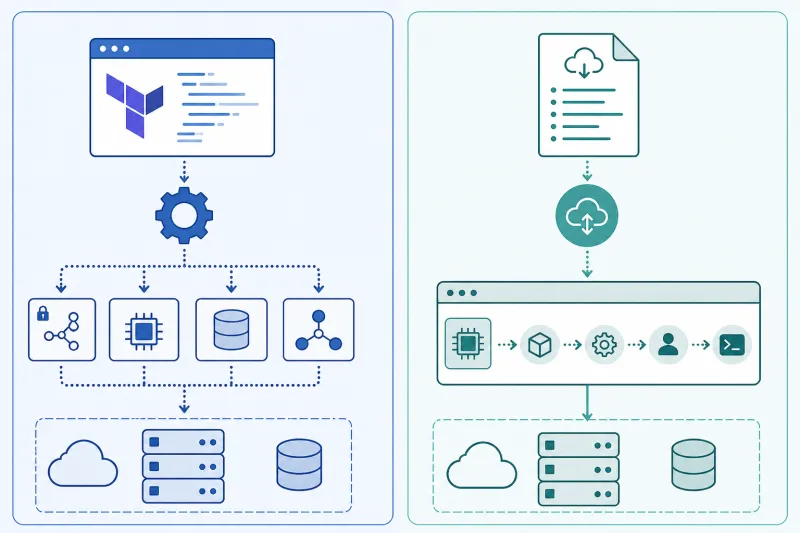
- A provisioning workflow so regional adds are clicks/API, not tribal knowledge
TunnelFleet is aimed at that labor compression for VPN server fleets on your cloud (automated DigitalOcean provisioning today). Whether you use TunnelFleet or internal automation, treat toil reduction as cost reduction.
Lever 6: Use Regions and Reserved Commitments Wisely
- Turn off unused regional endpoints after travel seasons or project spikes.
- Prefer on-demand honesty for experimental regions; commit only when utilization is steady.
- Avoid premium networking add-ons you do not use (unused LBs in front of a single WireGuard UDP endpoint are a common waste).
Lever 7: Shared Gateways With Strong Tenancy Discipline
One gateway per employee is the most expensive design. One gateway for the company with:
- Separate peer identities
- Tight
AllowedIPs/ routes - Clear admin roles
…is usually enough for SMB scale. Split gateways when blast radius, compliance boundaries, or regional latency demand it—not as a default for every squad.
What Not to Cut
- Patching and updates
- Unique keys per user/device
- Offboarding revocation
- Basic monitoring and disk/CPU alerts
- Firewall least privilege
- Documented recovery (you can rebuild the gateway)
Savings that create a permanent orphan peer or an unpatched UDP listener are not savings.
Sample Cost-Reduction Sequence (30 Days)
Week 1: Inventory gateways, seats, and egress; enable metrics.
Week 2: Move default clients to split tunnel; remeasure egress.
Week 3: Downsize or consolidate nodes based on CPU/bandwidth data; remove abandoned VMs.
Week 4: Automate rebuild + onboarding; cancel redundant commercial seats.
Re-check user experience after each step so you do not “save” money by shifting cost into support.
Labor Math Example
Suppose peer changes average 20 minutes of engineer time and you do 40 changes/month. At a loaded cost of $100/hour, that is roughly $1,300/month in toil—before incidents. A provisioning workflow that cuts changes to 5 minutes each saves real money even if compute stays identical.
Likewise, a two-hour outage that blocks 50 employees is an expensive “savings” if you skipped redundancy or monitoring to trim a small VM invoice. Cost optimization must include downtime risk.
Bandwidth Accounting Tips
- Tag VPN instances in cloud billing so egress is visible
- Compare split-tunnel vs full-tunnel pilots with the same user cohort
- Watch for CI systems accidentally using employee VPN routes
- Disable split DNS mistakes that send large downloads through the tunnel unintentionally
Some “VPN bandwidth” spikes are misrouted backups or container pulls. Fix routing, not only SKUs.
When Paying for SaaS Is Cheaper
If you need mature device posture checks, always-on clients with vendor support, and you lack platform capacity, a commercial remote-access product can be cheaper than a poorly staffed self-hosted fleet. The goal is secure access per dollar of total cost—not self-hosting as an aesthetic.
Instance Generations and Architecture Refresh
Cloud providers periodically offer better price/performance SKUs. A yearly refresh that:
- Moves WireGuard gateways to newer instance types
- Drops unused regions
- Rebuilds from current Ubuntu LTS
…often reduces spend more cleanly than endless manual sysctl tuning. Because VPN nodes hold little unique state (peers live in inventory), rebuilds are cheap if automation exists.
Track cost per active peer monthly. If headcount grows but peer counts and egress stay flat, you may have stale accounts—revocation is a cost control.
Avoiding Hidden Add-Ons
Watch for:
- Unused load balancers in front of UDP VPN
- Oversized disks left at defaults
- Snapshot sprawl of old VPN VMs
- Duplicate monitoring agents that add little signal
- Inter-AZ or inter-region data transfer from poor gateway placement
These line items show up as “cloud waste” rather than “VPN product cost,” which is why VPN FinOps belongs in the same review as other edge services.
Best Practices
- Optimize the largest bucket first (often egress or labor, not the $12 VM).
- Prefer split tunnel unless policy requires otherwise.
- Standardize WireGuard as primary where UDP works.
- Keep TCP fallback limited and named clearly.
- Destroy idle regional endpoints on a schedule with a re-create runbook.
- Include VPN in FinOps reviews next to other edge services.
- Track cost per active peer per month as a simple KPI.
- Budget automation work against hours saved, not only against instance fees.
Common Mistakes
- Shrinking VMs while leaving full tunnel on for everyone.
- Deleting the only monitoring you had to save pennies.
- Keeping five shadow VPNs because teardown feels risky.
- Forcing OpenVPN TCP org-wide and buying larger CPUs to compensate.
- Ignoring engineer time in the business case.
- Multi-region forever without traffic to justify it.
- No owner for cloud VPN resources in the account inventory.
- Cutting revocation process rigor during “cost initiatives.”
FAQ
Is self-hosted always cheaper than VPN SaaS?
At modest scale with automation and split tunnel, often yes. Without automation, labor can erase the difference. Model both.
Will WireGuard lower my bill?
It can lower compute needs versus heavier stacks. It will not reduce egress if you still full-tunnel the same bytes.
How small can a company VPN VPS be?
For light WireGuard use, 1 vCPU can work; validate concurrency. Saving $8/month while creating weekly outages is a bad trade.
Does DigitalOcean help with VPN costs?
Simple pricing and right-sized droplets help many teams. TunnelFleet can reduce operational cost on DigitalOcean by automating provisioning. Other clouds may be cheaper or more expensive depending on egress and existing commitments—run your numbers.
Should we use spot/preemptible instances for VPN?
Generally no for primary remote access. Unexpected eviction is a false economy. Use stable instances for gateways.
Can I share one VPN across production and staging?
Network paths can share a pattern; blindly bridging environments increases risk. Prefer policy-separated routes or separate gateways when blast radius matters. Cost isolation and security isolation sometimes conflict—decide explicitly.
What about shared residential or virtual office IPs?
Out of scope for serious company remote access. Stick to cloud VPS you control.
How do I show savings to finance?
Report before/after egress GB, instance spend, seat cancellations, and estimated hours saved on onboarding—not just a protocol slogan.
Summary
Reduce VPN cost by measuring where the money goes, cutting unnecessary full-tunnel egress, right-sizing efficient WireGuard gateways, consolidating abandoned endpoints, and automating lifecycle work. Do not save money by weakening key hygiene or patching. The cheapest VPN is the one that is split-tunneled, right-sized, automated, and owned.
If you want to automate VPN server deployment instead of configuring everything manually, TunnelFleet helps you provision and manage VPN infrastructure on your own cloud provider with minimal manual setup.
Share this article
Practical guides on VPN infrastructure, server automation, and self-hosted networking from the TunnelFleet team.
View all articles by TunnelFleet Editorial →